

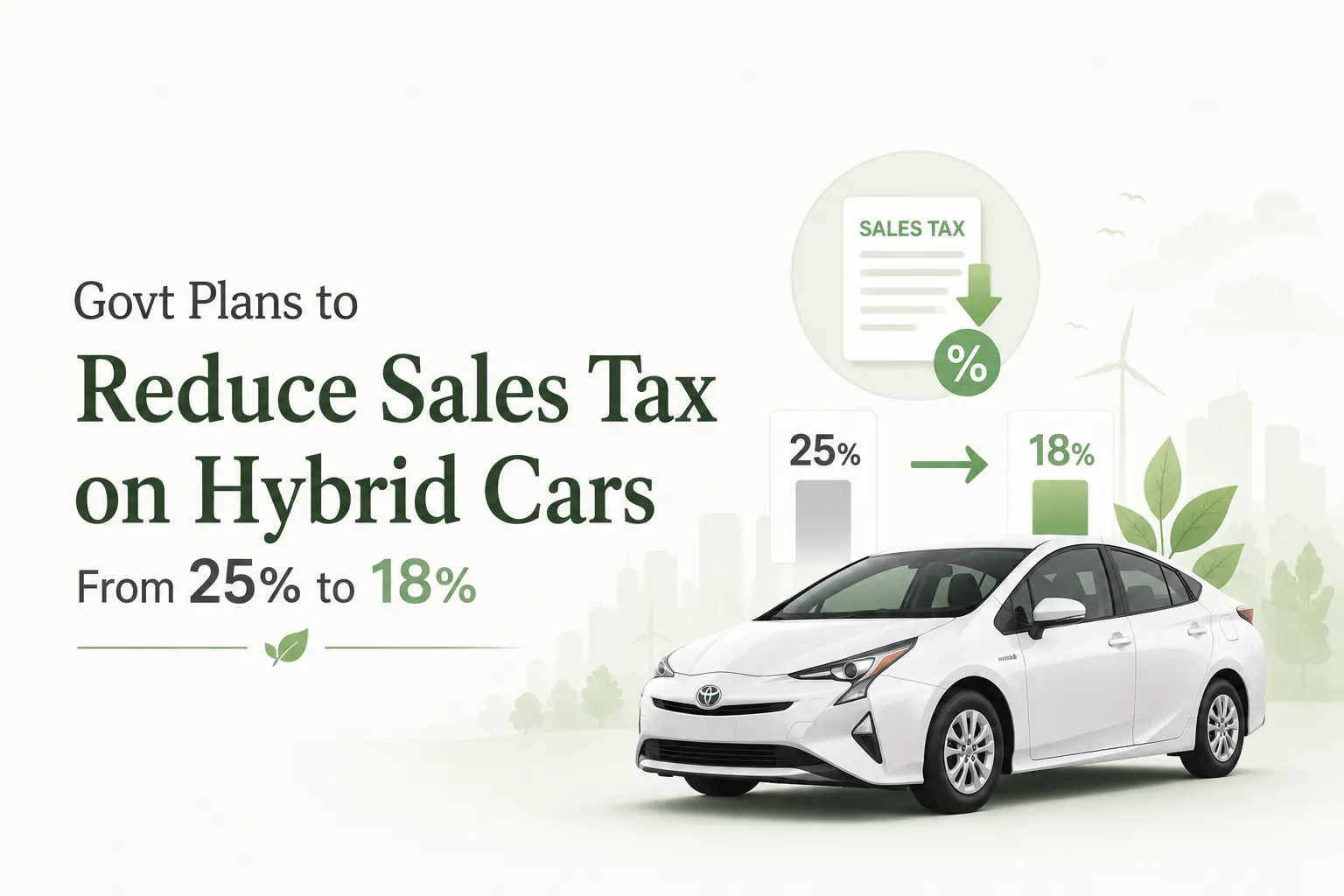
The government is preparing to walk back part of a tax hike that caught Pakistan hybrid car market off guard just weeks ago.
Officials have filed a cabinet summary proposing to cut the sales tax on hybrid vehicles from the current 25 percent down to 18 percent. If approved, the change would apply to both locally manufactured and imported hybrid vehicles.
The move comes less than a month after hybrid vehicles were unexpectedly pushed onto the standard tax rate. Until June 30, 2026, hybrids benefited from a concessional sales tax of 8.5 percent for engines up to 1800cc, and 12.75 percent for larger engines.
No extension was announced, and no new auto policy was finalized in time to replace it. As a result, hybrid vehicles automatically shifted to Schedule II of SRO 297(I)/2023 on July 1, placing them under the standard 25 percent sales tax that applies to conventional vehicles.
According to reporting on the matter, the jump was not the result of a deliberate policy decision. It happened simply because the government did not renew the exemption before the deadline, effectively tripling the tax rate on hybrids overnight.
| Timeline | Sales Tax on Hybrid Vehicles |
|---|---|
| Until June 30, 2026 | 8.5% (up to 1800cc) / 12.75% (above 1800cc) |
| From July 1, 2026 | 25% (standard rate, after concession lapsed) |
| Proposed new rate | 18% (pending cabinet approval) |
The sharp increase reportedly hit consumer demand hard, with several manufacturers said to be delaying invoices while waiting for clarity on which tax rate would actually apply.
Under the newly proposed 18 percent rate, hybrid vehicles would still be taxed higher than they were before July 1, but at a noticeably lower rate than the 25 percent currently in effect. It represents a middle ground between the old concessional rates and the general sales tax regime.
The back-and-forth also reflects a broader tug-of-war over Pakistan next auto policy. Earlier proposals floated by the government included setting hybrid vehicle tax at 50 percent of the standard 18 percent rate, alongside a 1 percent sales tax on new energy vehicles. Reports indicate the IMF has pushed back on requests to maintain deeper tax exemptions for EVs and hybrids, complicating efforts to finalize a long-term Auto Policy for 2026-31.
Government sources had earlier suggested hybrid tax rates would stay unchanged going into the new fiscal year, even as electric vehicle imports were expected to face sales tax as high as 25 percent. That expectation did not hold once the concession lapsed without a replacement framework in place.
For now, the proposed 18 percent rate still needs cabinet approval before it can take effect. Until then, hybrid vehicles in Pakistan remain subject to the 25 percent standard sales tax, a rate that has already pushed up prices on several popular hybrid models in the local market.
If the cabinet does approve the reduction, it would offer some relief to buyers who have watched hybrid prices climb sharply since July, while also supporting the government stated goal of encouraging wider adoption of more fuel-efficient vehicles.
