Pakistans national ID card has the biggest technical facelift in the past ten years. NADRA has started a new National Identity Card (NIC) on the secure Quick Response code, which has been used since 14 years.
The news was released on Independence Day (14th August 2026) and the new card will be effective from that date. It is a huge milestone in achieving self-reliance and easy digital identity verification, according to NADRA.
What is Actually Changing
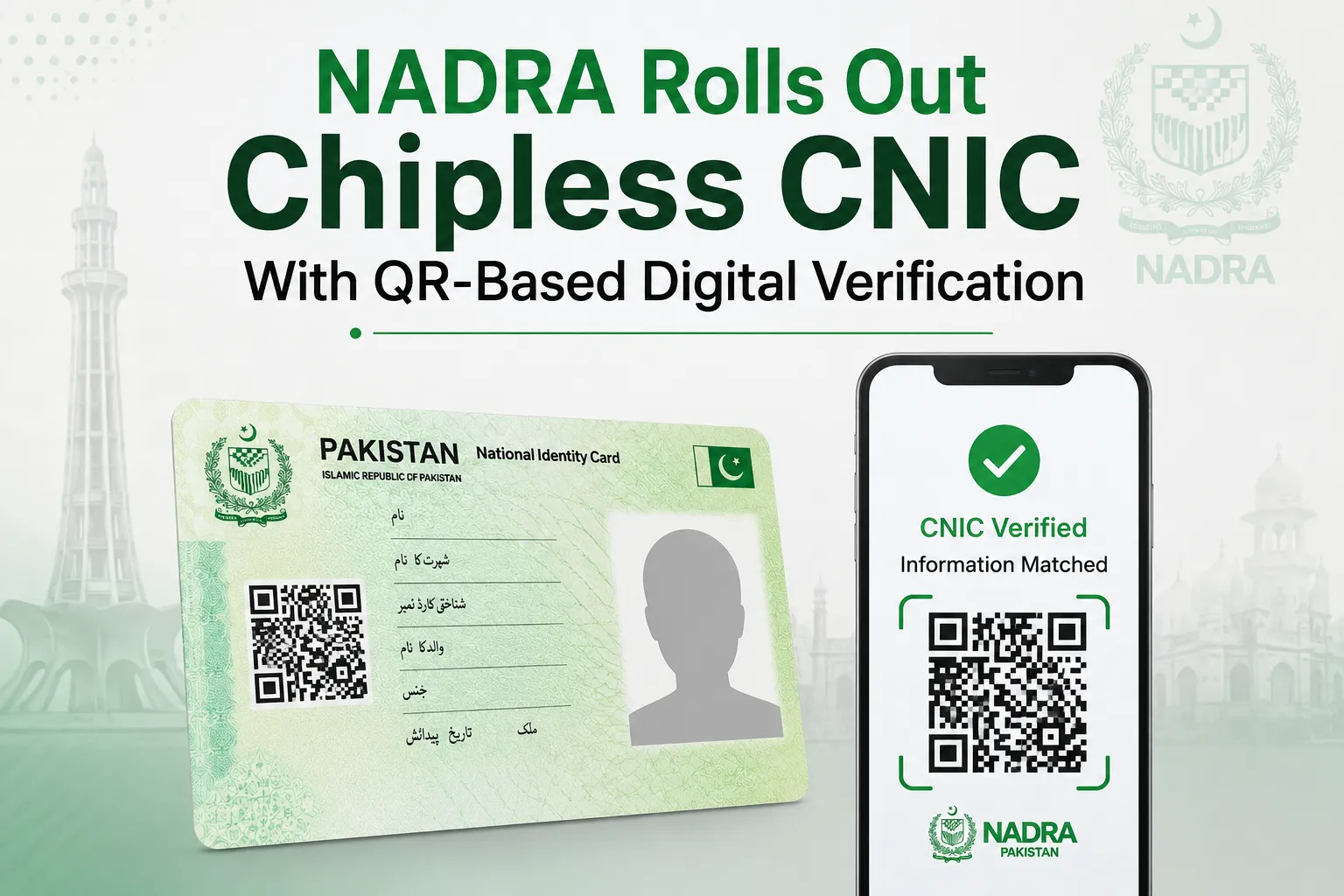
The new design has a secure QR code which replaces the embedded microchip in the current Smart National Identity Card. It can be scanned and checked with the Pak Identity (PakID) mobile application of NADRA by using an ordinary smartphone.
The QR code holds the cardholder key identification information and photo. It enables the institutions to more collect names, addresses and other identity data that was not resolved by the use of a chip-based system.
End to End is made in Pakistan
The new card is being produced by the National Security Printing Company (NSPC) in Karachi, based on the technical and security requirement of NADRA. It is constructed out of polycarbonate material, not the current chipless cards it will replace, which are made from Teslin.
The Federal Government approved the new card design, which means that NADRA has a short window of six months to get ready for the launch on Independence Day.
Why Move Away From the Chip
The Smart National Identity Cards with chips were introduced almost 14 years ago, but the usefulness was many organizations did not have the specialised equipment required to read the chip.
But a QR code eliminates that altogether, as it can be checked by any mobile phone or other camera-equipped item, rather than special chip-reading equipment. It is likely to speed up and broaden the availability of ID verification, both in public and private sector institutions.
What Stays on the Card
The new card has the same family number as the existing CNICs. It has special marks to identify individuals with disability, senior citizens, organ donors and residents of AJK.
Cardholder names and addresses will remain on both Urdu and English and will be according to the existing card format.
Who Gets Access to Verification Tools
The new QR-coded cards will be scanned and verified using a dedicated software, which will be made available to the telecom operators, banks, hospital, Pakistan Railways, police and other authorized institutions. It is ensure a uniform system for ID verification in different industries where this has not been standardized or as a result of inconsistent ID documentation practices.
Rollout Timeline
The transition is happening in phases rather than all at once.
| Phase | Timeline | What Changes |
|---|---|---|
| Phase 1 | From August 14, 2026 | QR-based card replaces the standard chipless CNIC |
| Phase 2 | From January 2027 | Rollout extends to NICOP and Juvenile Cards |
| Final Phase | To be confirmed | Pakistan Origin Card (POC) also shifts to chipless, QR-based format |
It is worth that all identity cards issued will remain valid their respective expiry dates, NADRA has confirmed. It is not a rush to go out and get a new expired card.
A Privacy Concern Worth Noting
There is an security issue that has come up in some of the commentary after the announcement you have to physically give the card to the reader and feed it into the reader to use the card, with a QR code you can scan it from a picture or a photocopy of the card.
Make identity data more accessible without the need of the cardholder, critics say, as the photocopies of CNIC are requested often in all day-to-day transactions in Pakistan and QR codes can be read with any smart phone camera. NADRA has release a detailed public comment on this particular concern.