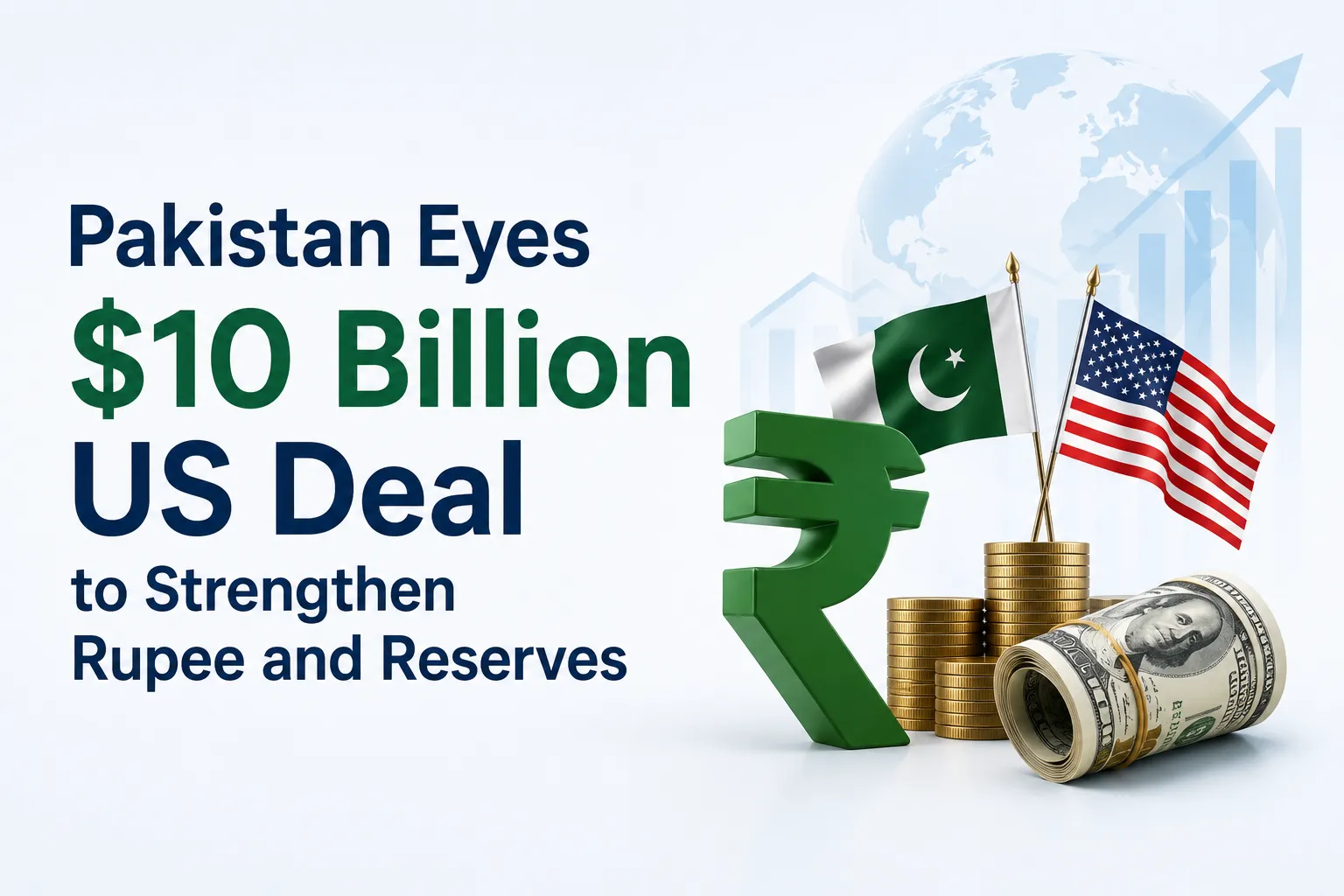
Pakistan has requested financial assistance from the United States of $10 billion to support the nation’s foreign exchange reserves and to relieve the pressure on the rupee.
Islamabad has asked the U.S. for $10 billion in Bilateral Exchange Stabilization Support Facility with a maturity of up to five years, according to Reuters citing a source briefed on the matter. Scott Bessent, the U.S. Treasury secretary, was the target of the request.
The ask came soon after the Finance Minister of Pakistan, Muhammad Aurangzeb met Bessent in Washington on Tuesday.
Once approved by the US, the facility will infuse much-needed strength into Pakistan’s foreign exchange reserves, ease some pressure on the rupee and decrease the reliance on multilateral lenders as the country keeps on rolling out fiscal and monetary reforms as part of its ongoing IMF programme.
It is not the sort of deal that the US Federal Reserve has for major central banks on the dollar swap lines. It is a rare exchange stabilization facility. Only a similar agreement was made with Uruguay in 2002 before an agreement was reached with Argentina in 2025, and Mexico has had a long-standing swap line with the US since the 1940s.
To bring out the importance of this demand, it is necessary to have a look at Pakistan’s recent financial past. In 2023, the country almost defaulted on its debt, thanks to a $3 billion standby loan from the International Monetary Fund (IMF). It later obtained a bigger $7 billion Extended Fund Facility, as well as an additional loan of $1.3 billion for climate change and natural disasters.
Despite the support, Pakistan is still relying on IMF disbursements, bilateral support and rollover loans from other countries, such as China and Saudi Arabia. In April, that dependence became apparent with the country being asked to pay back approximately $3.5 billion, which is approximately one-fifth of its total reserves, to the United Arab Emirates. At about the same time, Saudi Arabia pledged $3 billion in new support to help soften.
The central bank had forecast in January that reserves will continue to rise and could reach as high as $20 billion by the end of 2026, close to the record level they hit last year. A US backstop facility of this size would make a significant contribution to helping accelerate that process and would also convey a political message on the level of the US-Pakistan relationship.
The nation continues to be on the tight leash of an $7 billion IMF programme that has demanded politically challenging measures such as increased taxes, reduced spending and structural reforms. However, a U.S. facility would provide Islamabad with breathing space and lessen its vulnerability to delays in IMF disbursements or a rotation in bilateral support.
This is part of a larger trend where Pakistan has been strengthening its economic engagement with Washington in the past few months. The country has signed a cross-border cross-payment agreement with World Liberty Financial’s affiliate for transborder payments and discussed a memorandum of understanding with the USEXI bank to develop the closed PIA-owned Roosevelt Hotel in New York, besides courting US mining investment, including to the Reko Diq project, for which USEXI bank has already announced financing of 1.2 billion dollars.
It has been reported that the timing of the request relates to Pakistan’s involvement in the diplomatic work surrounding the Iran conflict, making the nation more visible on the U.S. agenda and possibly allowing Islamabad to use the invitation to look for additional economic assistance.
When contacted outside business hours in their respective time zones, neither the finance ministry of Pakistan nor the United States Treasury could comment. The nature of the ask, and if it will be granted and on what terms to be determined, but the volume and nature of the request shows Islamabad how important it considers it to be getting Washington to provide a direct financial backstop.