
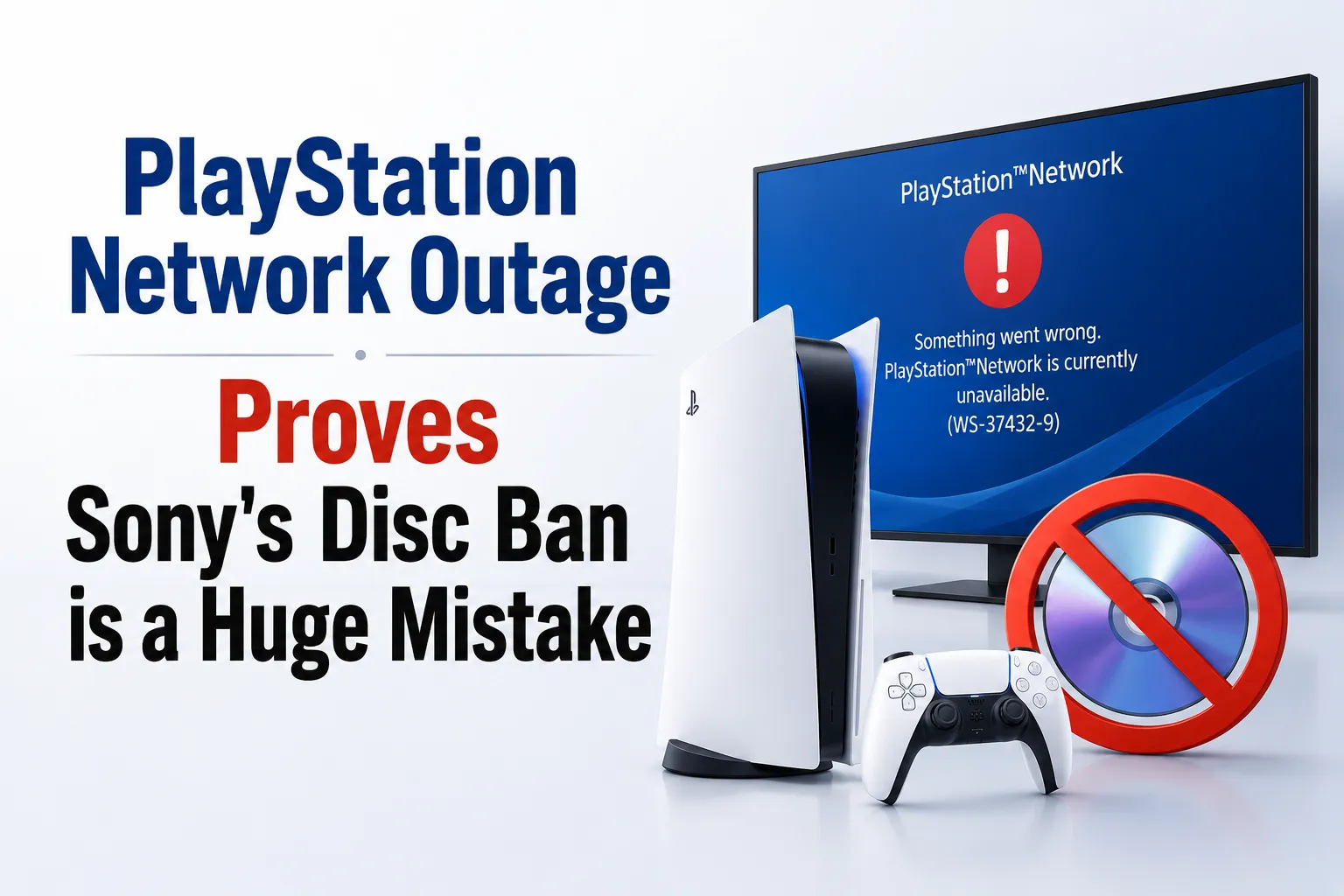
Sony PlayStation Network fell over the weekend all over the world and it was an awful time to do so.
Services started to experience some failures from approximately 6:40 to 8:30 a.m. ET on Friday, July 24, affecting some users in North America, Europe and Asia for more than six hours. During its peak, DownDetector received more than 7,000 complaints, including reports of failed logins, server connection problems, and logged out during a match. Sony status page eventually confirmed the situation for users, with all of the services listed as “experiencing issues.
AWS outage was blamed on multiple fronts for the disruption, with the focus being on the US-West-2 AWS region in Oregon, which spilled over into the gaming systems operated by Sony. Another factor cited was the heavy traffic that came from a separate open beta, the Marvel Tokon Fighting Souls, published by Sony simultaneously, but that is unverified.
The disruption was felt by players of both PS4 and PS5, transcending generational boundaries. Players with a physical disc and an offline set-up were mostly able to play, and continue to do so without online capabilities, such as multiplayer, whereas those who needed to verify their license before booting their digital games were left unable to do so. Additionally, the outage caused the delay of the EA Sports FC 26 championship at Esports World Cup, with pro gamers stuck mid-season without a game to play.
The fact that it happened at a time when the IT industry was in big news is what made it a larger story. In the same announcement, Sony Interactive Entertainment announced on July 1 that it will discontinue the production of new PlayStation games on physical discs beginning in January 2028, after a few weeks. After that, all new games will be released in either the PlayStation Store as a download or in retail packaging as a code, thus effectively ending optical media altogether for PlayStation.
That announcement had generated petitions and strong backlash from the gaming community, which has long stood behind a single principle that critics on that score have been using for years: If you have a digital library, it is good as the servers of the platform holder. That was the case when the outage happened on Friday, in front of millions of players who had been frustrated by the situation.
There was a lot of irony in the reactions on social media. A couple of users who were impacted on X simply stated that they could not play digital games until the fix landed, but could still go in a disc and play offline and the “all digital future” looked a lot less appealing.
Gaming outlets have noted that PSN has now suffered several known outages so far this year, and Sony has not provided any public explanation when it comes to any of those outages. It is the same sort of thing that PlayStation experienced in 2011, while experiencing a 24-day PSN outage after a cyber attack. In those days, the blow was cushioned, as digital distribution was not the prevalent method of game sales, critics noted. In today day and age, when it is not unusual to have your digital library have hundreds of titles, a similar event would leave many players completely out of the game.
Sony has also had separate, unrelated complaints for the past few months as accounts are being incorrectly classified as permanently suspended due to violations of its Terms of Service, with the company being slow to explain whether or not the affected users violated those terms or whether it was a technical error. It is not directly related to the weekend outage, but it is among a series of similarly disjointed messages which have led to PlayStation users increasingly berating Sony for its handling of problems related to users accounts and services.
Sony has not released a public post mortem to offer an explanation of the failings or how it will avoid repeating the same mistake. But one thing is becoming clear, it seems, in the still young and still very real-life challenges of the disc phase-out plan: it is as reliable as the servers behind it and this weekend those servers did not hold up.