

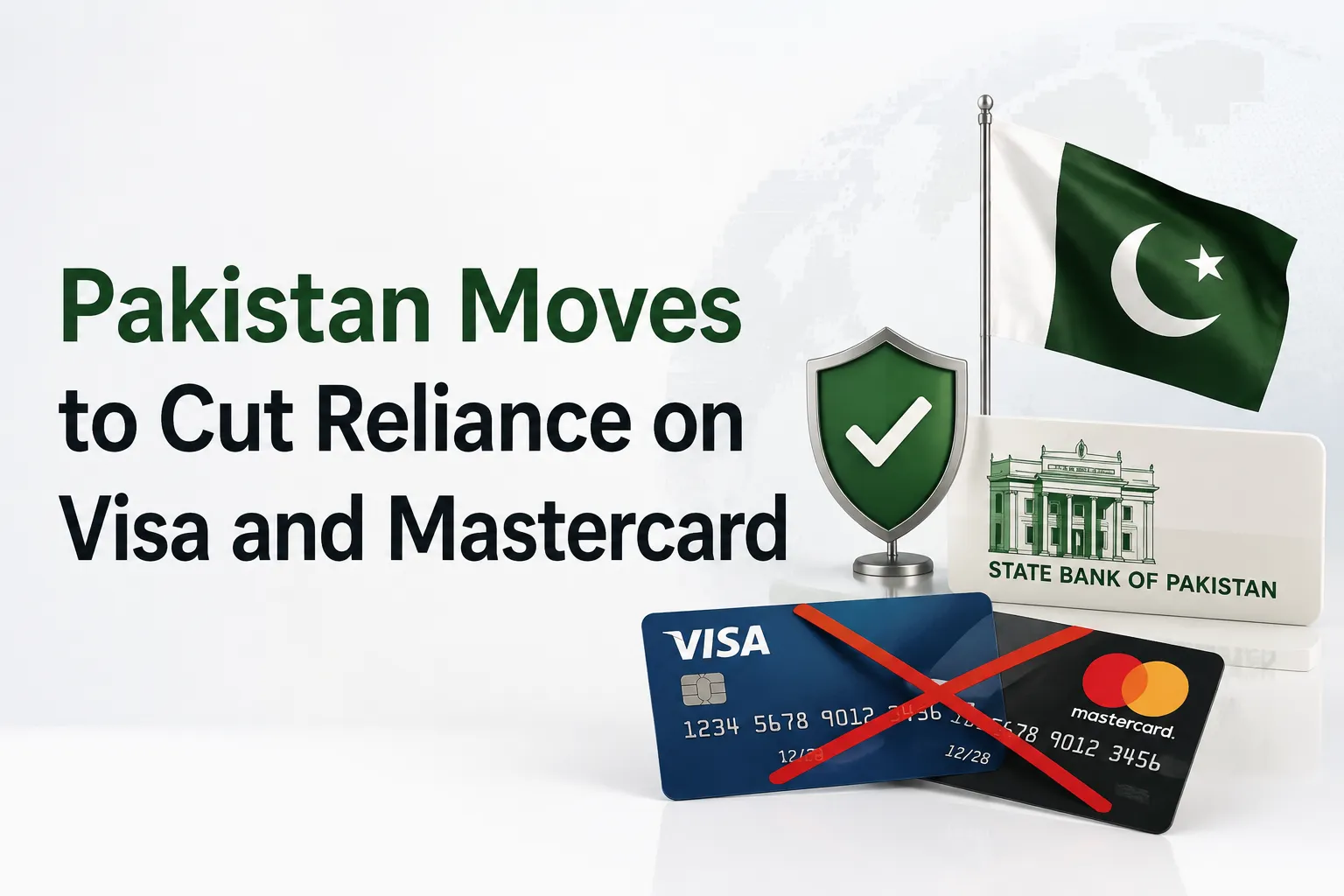
The government of Pakistan is again moving towards lessening the reliance on international payment giants such as Visa and Mastercard. 1LINK has submitted a proposal for the Government to introduce PayPak cards as an important element for Government employees salary accounts and several subsidy and public sector payment schemes.
These proposals, which are being shared with the State Bank of Pakistan (SBP), involve the compulsory issue of PayPak for payments not only for government salaries but for beneficiaries of social safety net schemes, subsidy schemes, and mass transit payment systems nationwide.
In order to accelerate the adoption of the local payment network, 1LINK has also put forward the idea of certain tax benefits for PayPak as a local payment network. Other forms of cashback, such as saving on fuel, public transport and utility bills, are also included in the plan.
The proposal is not only an incentive. 1LINK is urging that all key government service centres, such as NADRA, passport and excise centres, have a point-of-sale (PoS) terminal to accept PayPak cards directly.
The move is part of a comprehensive SBP plan for improving the country digital payment ecosystem, which aims to redirect more volume of transactions from foreign card networks to the domestic counterparts PayPak and Raast.
The central bank said recent developments align with this trajectory. Co-badged PayPak cards, which can be used to pay both domestically and internationally, and the government acceptance of e-commerce payments and merchant incentive programs are moving in the right direction.
One of the fastest growing is Raast Person-to-Merchant (P2M) payment system. The SBP announced that: The daily P2M transactions were estimated to be about 60,000 in June 2025, but increased to nearly 1.1 million by June 2026, having received a Raast QR-code subsidy programme of Rs 3.5 billion.
PayPak is Pakistan first domestic card payment scheme, which was introduced by 1LINK in 2016 under the SBP supervision. It was created to provide a locally run alternative to the international network, reduce the transaction costs and enhance financial inclusion throughout the country.
On a long-term national digital payments roadmap, SBP has been building this ecosystem in recent years with the co-badging of PayPak cards and harmonizing with Raast.
